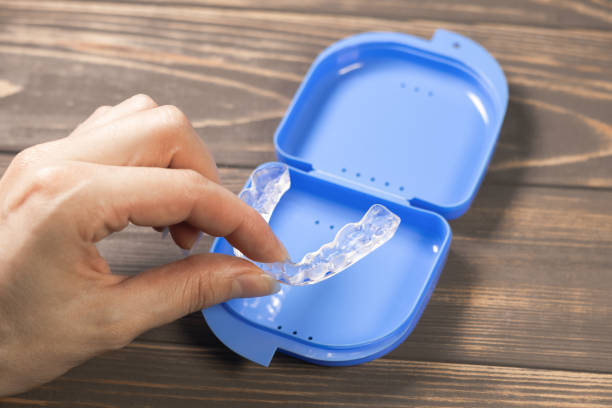
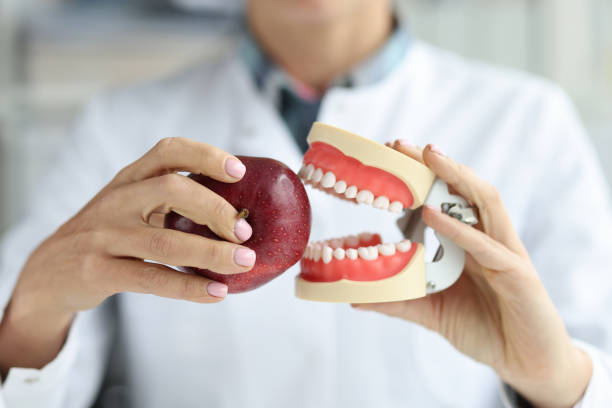
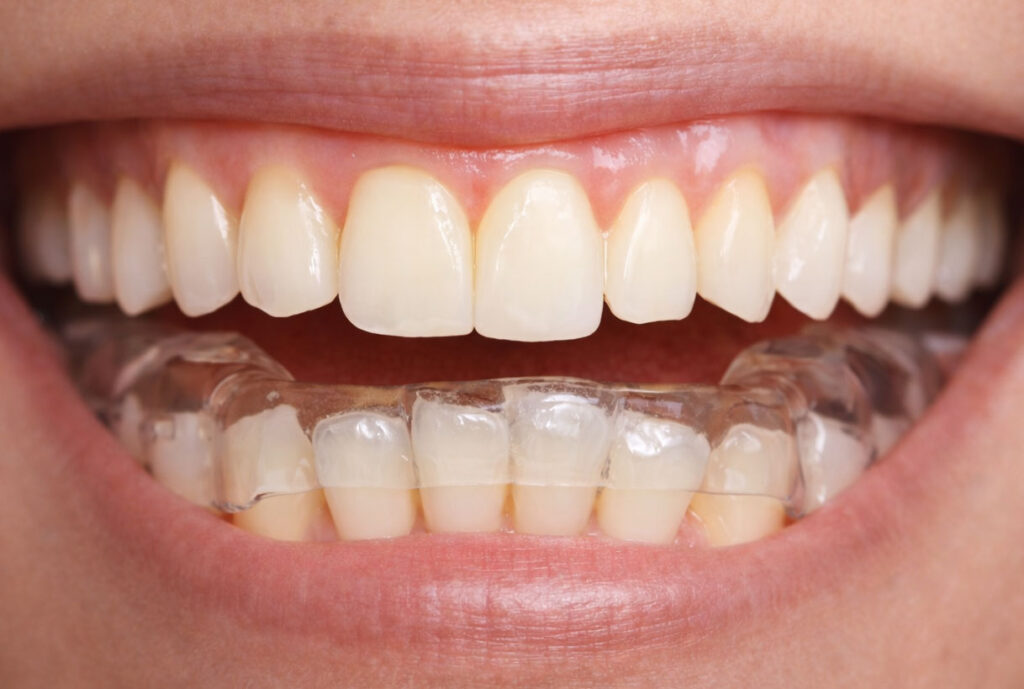
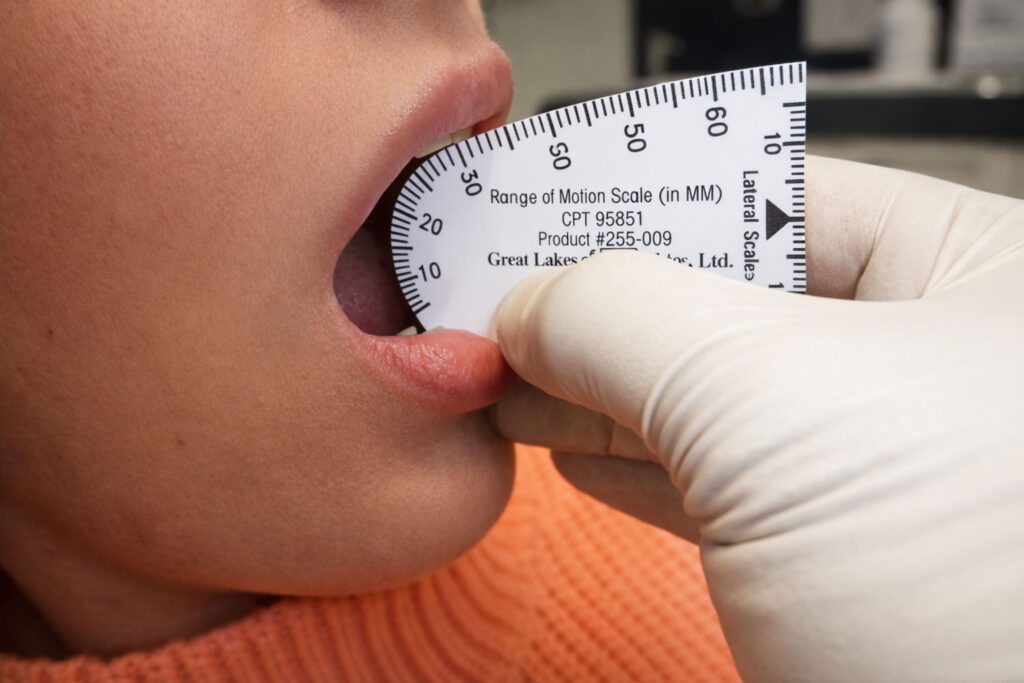
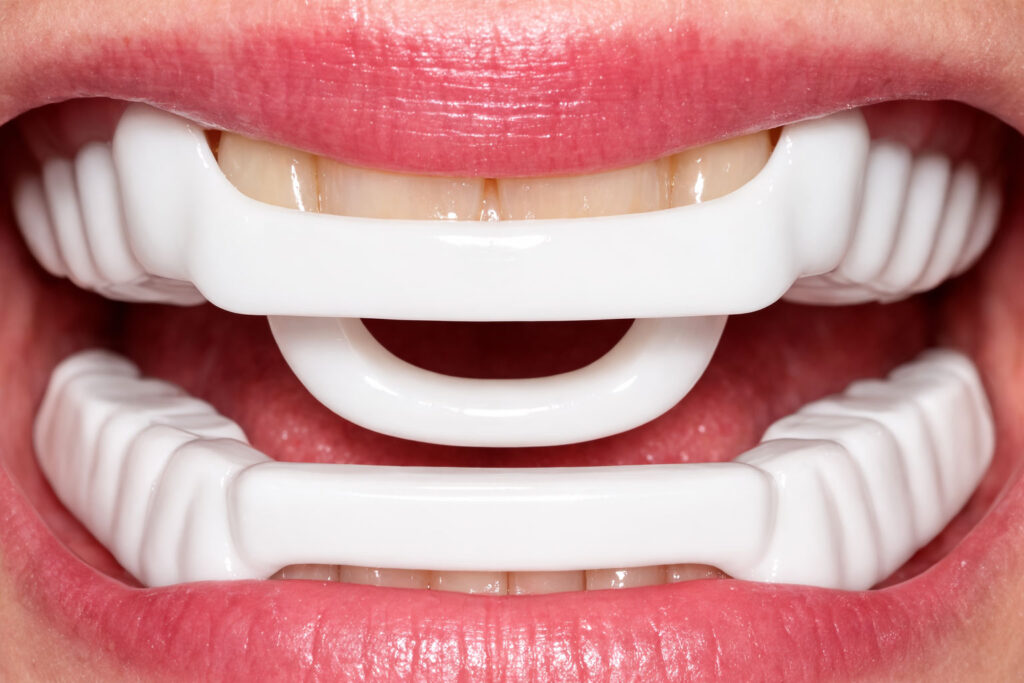
Orthotics and splints are custom-made appliances designed to support how the jaw joints, muscles, and teeth work together. They are commonly used as part of a personalised care plan for patients experiencing jaw pain, muscle tension, clenching or grinding, or symptoms affecting the jaw joint. These appliances help support more balanced tooth contact and can modify how forces are distributed through the jaw joints. They may also reduce muscle strain, improve jaw movement patterns, and protect the teeth during periods of clenching or grinding.
Jaw orthotics, often referred to as splints, are custom-made therapeutic appliances worn over the teeth. They differ from standard night guards, as they are designed to support the jaw joints and muscles rather than simply protect the teeth. A therapeutic orthotic is designed to influence how the jaw system functions by adjusting how the teeth contact and how forces are distributed through the jaw joints and muscles. These appliances are individually designed based on clinical findings and are typically worn for specific periods of time depending on the treatment goals and presenting symptoms.
Orthotics may be recommended when assessment identifies factors that are placing strain on the jaw system. These factors may involve the jaw joints, surrounding muscles, or the way bite forces are distributed.
For many patients, orthotics are one component of a broader management approach. Jaw symptoms often develop from a combination of mechanical, muscular, and functional factors. Because of this, treatment plans frequently involve several strategies working together.
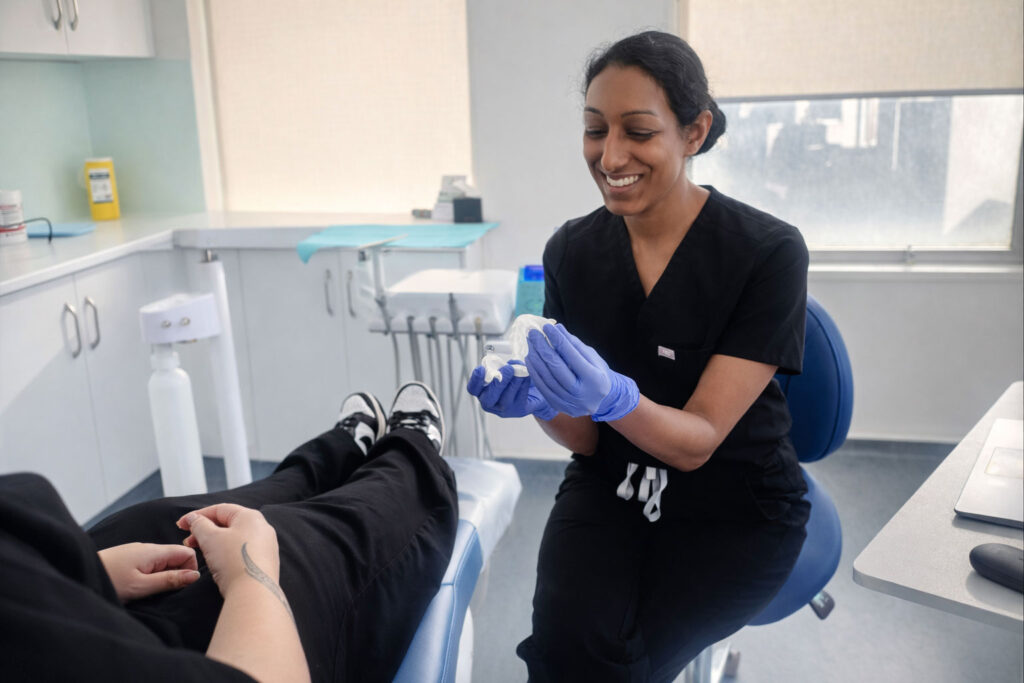
Because jaw symptoms can have several contributing factors, treatment decisions are based on clinical assessment rather than symptoms alone. A detailed evaluation helps determine whether orthotic therapy may be appropriate and how it might fit within a broader care plan.
Orthotic therapy is one of several conservative treatment options used in the management of temporomandibular disorders.
Regular reviews also help identify early signs of strain or relapse, allowing treatment to be adjusted so that progress is maintained.
This process helps ensure that treatment continues to align with the patient’s needs as symptoms and jaw function change.
TMJ symptoms rarely come from the jaw alone. They can involve joint mechanics, muscle tension, bite function, posture, breathing, and sleep. At TMJ Centre Melbourne, care begins with understanding why symptoms are occurring. Treatment decisions follow diagnosis, not symptom labels. Care plans are personalised and often combine approaches, with progress reviewed and adjusted over time.
Orthotics are commonly used in the management of conditions affecting the temporomandibular joints and surrounding muscles. These conditions are often grouped under the term temporomandibular disorders (TMD).
Orthotic therapy is designed to influence how forces are distributed through the jaw system, which can help support joint and muscle function as part of a broader care plan.
Because TMJ symptoms can arise from several contributing factors, treatment decisions are guided by clinical assessment.